







Now Reading: The Algorithm That Reads Your Body Better Than You Do
-
01
The Algorithm That Reads Your Body Better Than You Do
The Algorithm That Reads Your Body Better Than You Do

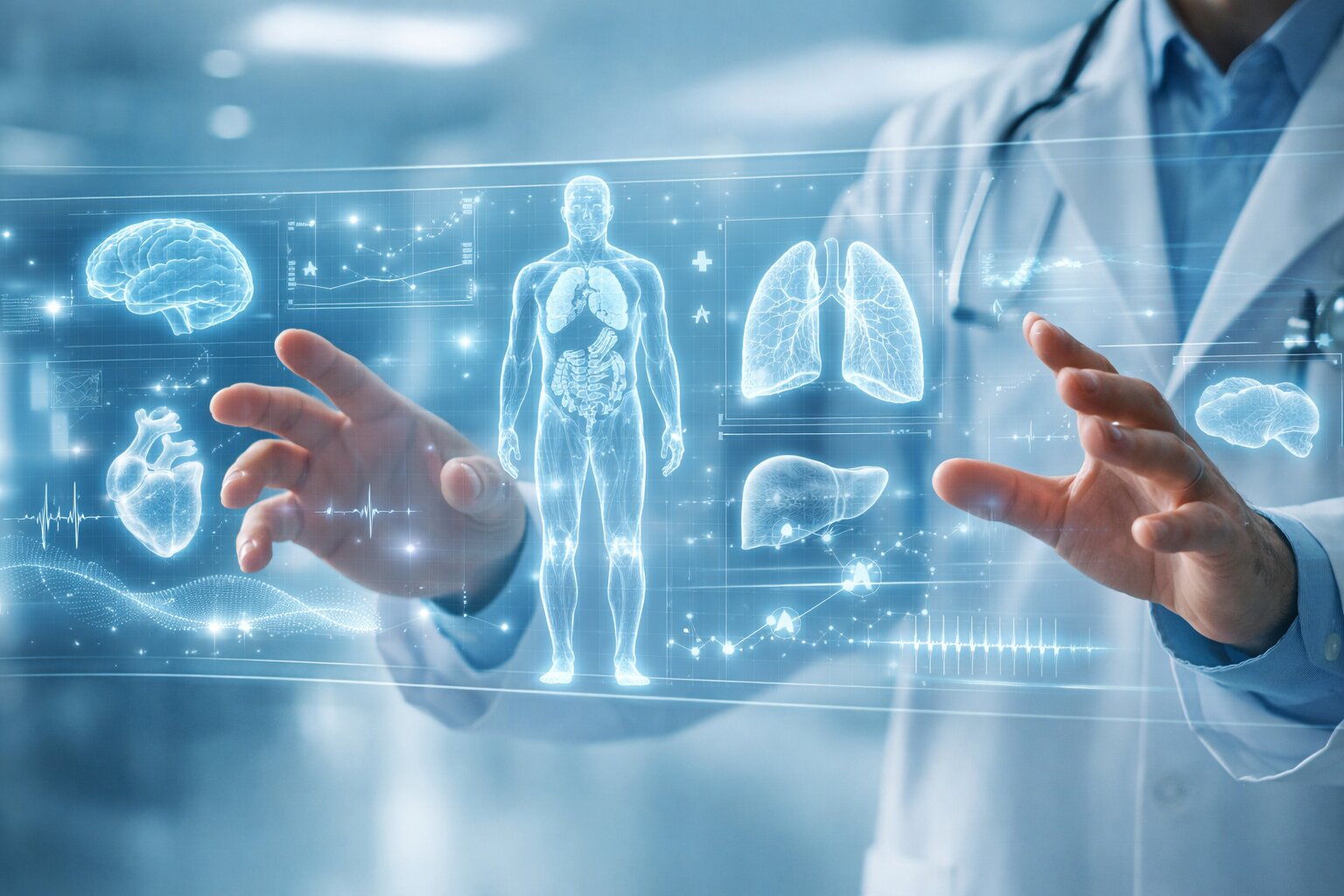
In a hospital in New Delhi, an AI system called MadhuNETrAI is scanning retinal images from diabetic patients — patients who may never have visited an ophthalmologist. Across the world in a Boston lab, a model trained on millions of molecular structures is suggesting a new antibiotic compound no human chemist had previously considered. These are not predictions for 2050. These are things happening right now, in 2025 and 2026. We are living inside a medical revolution, and most people don’t know it yet.
The Diagnosis Problem — and Why Machines Are Solving It
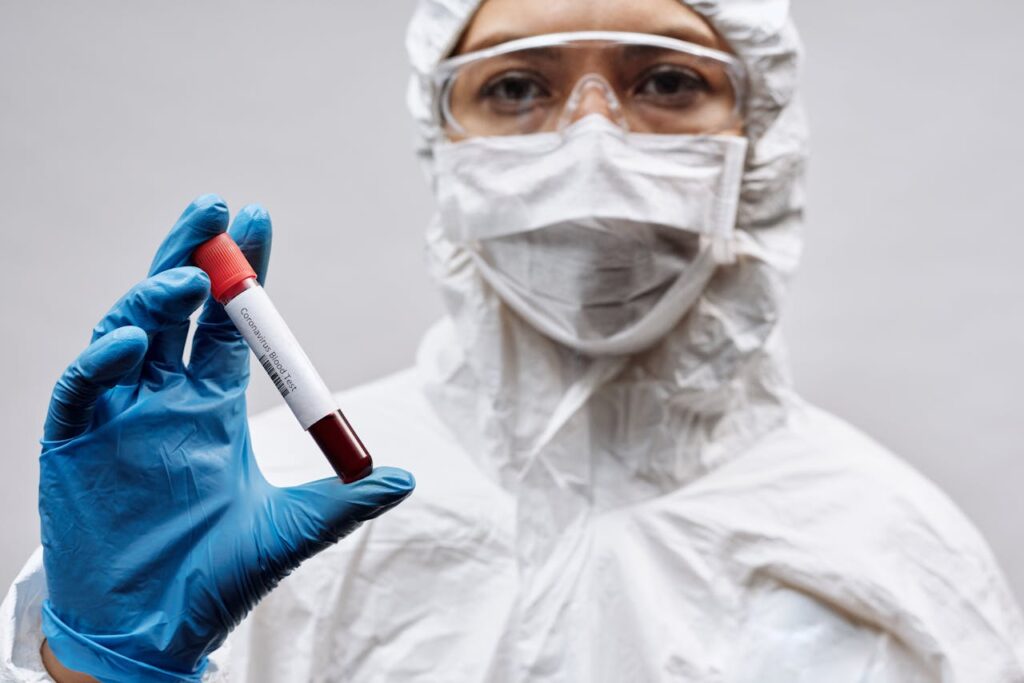
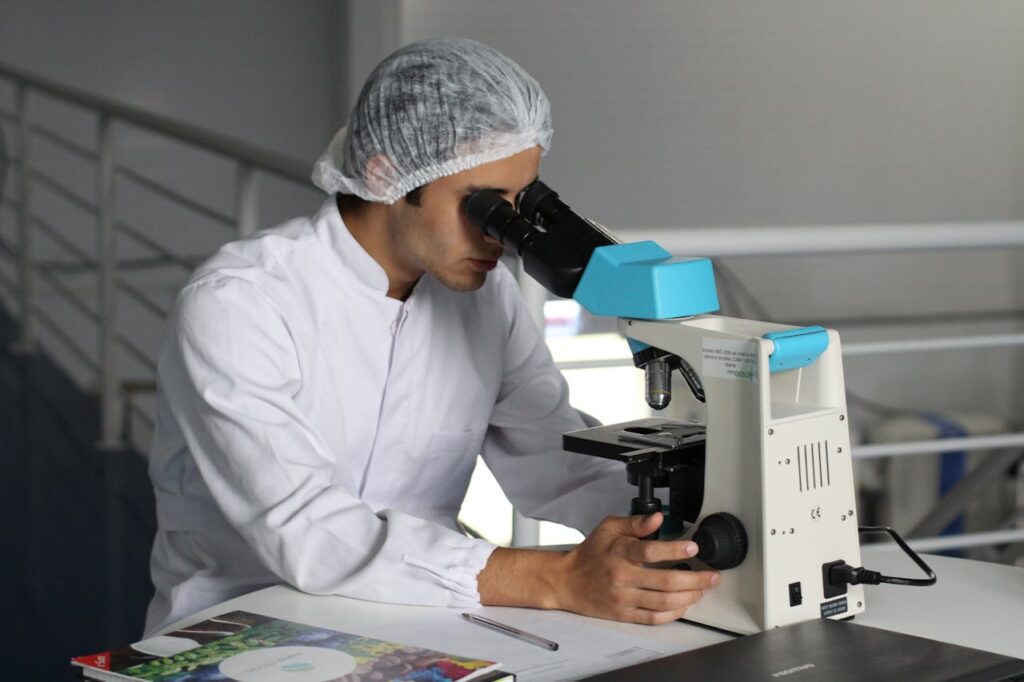
Medical errors in diagnosis affect approximately 5% of the global population every year. That’s not a small rounding error — it’s hundreds of millions of missed, delayed, or wrong diagnoses that can reshape or end lives. The root cause isn’t incompetence; it’s the sheer volume and complexity of medical information no human brain can fully master. A radiologist reviewing 200 scans in a shift will inevitably fatigue. A physician seeing 40 patients a day cannot hold every rare differential diagnosis in mind simultaneously.
AI doesn’t get tired. It doesn’t have bad days. And increasingly, it doesn’t miss things humans miss.
Companies like Aidoc and Viz.ai have already obtained FDA clearance for AI solutions in stroke detection and emergency triage. Their systems analyze CT scans in real-time and alert care teams to critical findings within minutes — a window that can be the difference between full recovery and permanent disability.
Microsoft’s CXRReportGen model generates clinic-ready chest X-ray reports with high accuracy. MedImageInsight, a multimodal model covering X-rays and pathology, delivers up to 15% higher accuracy than previous open-source imaging models. These aren’t prototypes. They are being deployed in clinical settings today.
“AI systems began outperforming humans in complex diagnostic tasks. Ambient scribes and clinical copilots significantly reduced clinician burnout and documentation time.”
— The Week, Year-End Healthcare AI Review, December 2025
Drug Discovery: From Decades to Years (or Months)
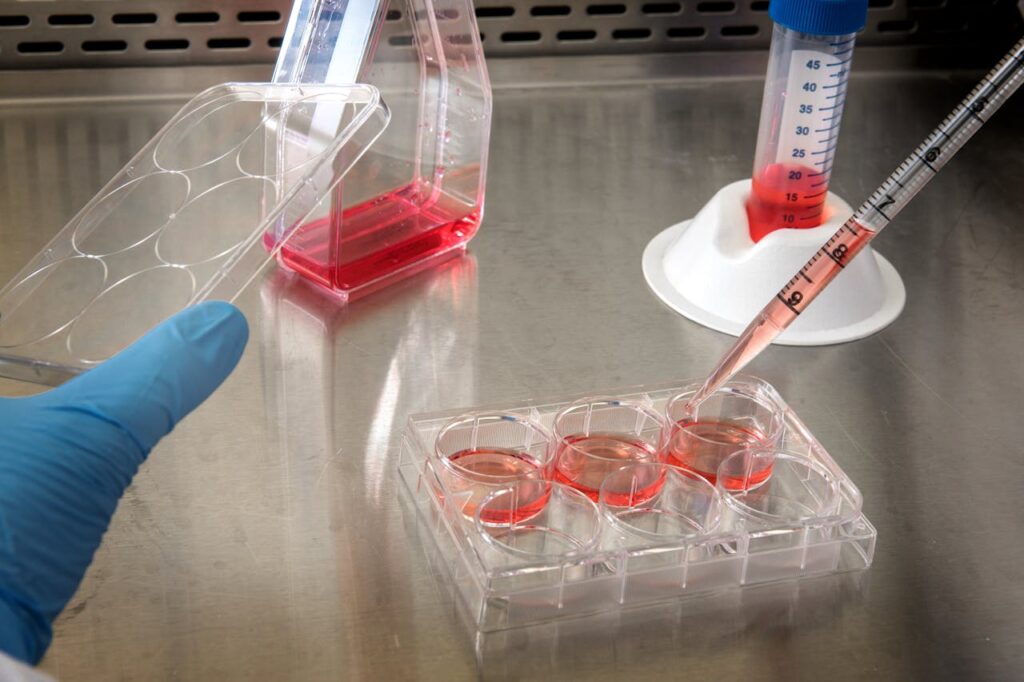
Traditional drug discovery is one of the most inefficient processes in modern science. It takes an average of 10–15 years and costs over $2 billion to bring a single drug from concept to patient. Most candidates fail. The failure rate in clinical trials hovers around 90%. AI is attacking this problem from multiple angles — and the results are beginning to look like a paradigm shift.
Google DeepMind’s AI identified a previously unknown protein interaction critical to the survival of certain cancer cells — a discovery that points to an entirely new class of drug targets that could selectively disrupt cancer growth while sparing healthy tissue.
Researchers at MIT and McMaster University trained a generative AI model to propose entirely new antibiotic structures. The result: novel compounds effective against drug-resistant bacteria — compounds no human chemist had previously designed.
Isomorphic Labs, a DeepMind spinoff, announced its first AI-designed drugs entering human trials — a landmark milestone. Their platform uses AI to model protein interactions and design novel drugs faster than any traditional method.
MIT and Recursion Pharmaceuticals developed Boltz-2, a model enabling ultra-fast prediction of protein–ligand complex structures and binding affinity. It collapses months of computational chemistry into hours. Pharmaceutical AI labs are processing multi-modal biological datasets to identify personalized drug targets, reducing early-stage research time by up to 50%.
Precision Medicine: The Era of the N-of-1 Treatment
For most of the history of medicine, treatments were designed for the average patient — a statistical fiction. A cancer drug that works for 60% of patients still fails for 40%. But what if we could know in advance which 40%? What if a treatment could be designed not for a population, but for you specifically?
AI is making this possible through the integration of genomics, proteomics, and clinical data at a scale previously unimaginable.
AI analysis of hundreds of exomes in medulloblastoma (brain cancer) cases has identified specific molecular subgroups, enabling physicians to administer precisely calibrated treatment doses. Google’s MedGemma model — purpose-built for clinical language — integrates disparate patient information to provide state-of-the-art reasoning for diagnostic support. TxGemma, Google’s companion model, is specifically tailored to accelerate drug development using patient-level and molecular data simultaneously.
A model from EPFL (École Polytechnique Fédérale de Lausanne) mimics human decision-making with unprecedented accuracy, opening new pathways for personalized mental health diagnostics.
The Honest Reckoning: What AI Gets Wrong
Data bias: AI models trained predominantly on Western populations can perform poorly — or harmfully — when applied to different ethnic groups. A diagnostic AI calibrated on predominantly white European patients may miss patterns in South Asian, African, or Hispanic patients.
Transparency: Many high-performing models are “black boxes” — they provide answers without explainable reasoning, which is deeply problematic in clinical contexts where accountability matters.
Regulatory gaps: The pace of AI deployment is outrunning the capacity of regulatory bodies to evaluate and clear tools safely.
Cybersecurity: Healthcare AI systems carry vast quantities of sensitive patient data, making them high-value targets for attacks. Getting these wrong is not just a technical failure — it is a patient safety failure.
The Bottom Line
We are at an inflection point in the history of medicine. AI is not a tool that will arrive someday — it is already changing how diseases are found, how drugs are designed, and how physicians make decisions. The algorithms are reading scans, proposing molecules, supporting diagnoses, and in some contexts, outperforming humans on specific tasks.
The question is no longer whether AI will transform healthcare. It already has. The question now is whether we can ensure that transformation is equitable, explainable, and — above all — safe. The patients waiting on both sides of that question deserve no less than our full attention.
Research Sources & Citations
- Crescendo AI News — “Latest AI Breakthroughs in Healthcare” (2025). crescendo.ai
- Alation — “AI Healthcare Breakthroughs 2025: 10 Innovations Transforming Care” (December 2025). alation.com
- Canada’s Drug Agency (CDA-AMC) — “2025 Watch List: Artificial Intelligence in Health Care.” NCBI Bookshelf. ncbi.nlm.nih.gov/books/NBK613808
- Interesting Engineering — “From Gene Therapy to AI Diagnostics: 7 Medical Breakthroughs of 2025” (January 2026). interestingengineering.com
- Alpha Sophia — “Top AI Healthcare Trends Shaping the Future in 2025.” alphasophia.com
- PMC / NCBI — “Artificial Intelligence in Healthcare and Medicine: Clinical Applications, Therapeutic Advances, and Future Perspectives.” pmc.ncbi.nlm.nih.gov/articles/PMC12455834
- The Week — “From Drug Discovery to Diagnosis: The AI Models That Transformed Health Care in 2025” (December 31, 2025). theweek.in
- North American Community Hub — “10 Latest Breakthroughs in Medical & Test Equipment 2025” (November 2025). nchstats.com
- Scispot — “AI Diagnostics: Revolutionizing Medical Diagnosis in 2026.” scispot.com
- PMC / NCBI — “Artificial Intelligence in Healthcare: Transforming the Practice of Medicine.” pmc.ncbi.nlm.nih.gov/articles/PMC8285156
Stay Informed With the Latest & Most Important News
Previous Post
Next Post













Advertisement
